Is Pinsa suitable for a low-calorie diet? How many calories does it have? Is it lighter than pizza? These are just some of the questions we hear every day. And rightly so, because when it comes to flour-based products, the doubt is always the same: can you enjoy it without compromises or not?
The answer, as is often the case with these kinds of questions, cannot be an absolute yes or no. However, if we are talking about the Pinsa base alone, the answer is yes: its macronutrient profile has been specifically designed to fit easily into a balanced diet.
More broadly, it is important to keep in mind that there are always several factors to consider: toppings, preparation methods, portion sizes and, above all, how Pinsa fits into your overall daily diet.
In this article, we’ll clear things up: we’ll start with the reason why Pinsa was created and then move on to the concrete data and the differences compared to other baked products. The goal is simple: to understand whether Pinsa can truly be considered a light choice and how to include it in a balanced diet.
Is Pinsa light?
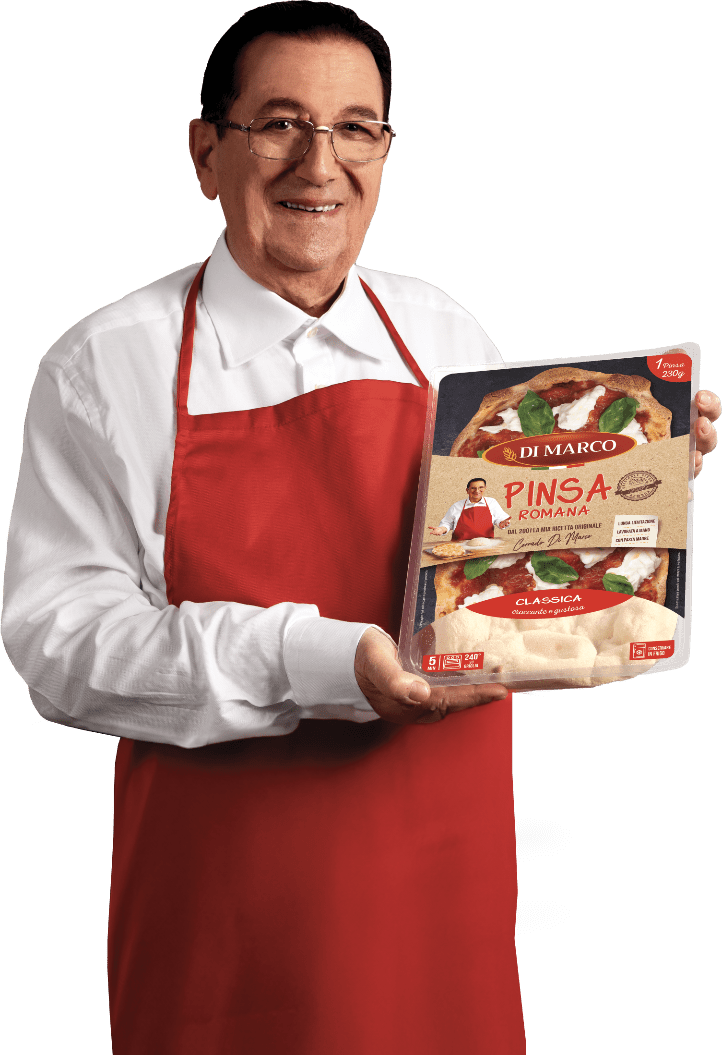
Pinsa was born in 2001 from a clear intuition by Corrado Di Marco: to innovate a world, that of baking, which had been offering the same things for far too long. There was a need for something new, capable of standing out while also aligning with emerging trends. It was precisely during those years that people began paying increasing attention to digestibility and lightness in their diets.
So yes, Pinsa was created to be light, but one clarification is necessary: when we talk about lightness, we always mean it in relation to its category. Pinsa is not a diet food in the absolute sense, but it was developed with the idea of being lower in calories and easier to digest than traditional baked products such as pizza and focaccia.
The technical choices made by Corrado Di Marco go exactly in this direction. The flour blend, the high hydration of the dough and the use of sourdough starter are not random decisions, but responses to the goal of making the product more digestible and lighter than the standards of the time. All this without sacrificing enjoyment: a distinctive flavor, a balance between a soft interior and a crispy exterior, and a texture that has helped make Pinsa recognizable and appreciated all over the world.
The rest, as they say, is history.
How many calories does Pinsa have?
A classic Di Marco Pinsa contains approximately 230 kcal per 100 grams, which becomes 530 calories for a whole base. To better understand the figure, it is enough to make a direct comparison:
- Classic Di Marco Pinsa: 230 kcal per 100 g;
- White pizza: approximately 300 kcal per 100 g;
- White bread (type 0 flour): approximately 275 kcal per 100 g.
Attention often focuses on carbohydrates, which represent the main energy source of the product and contribute significantly to its calorie content. Here, the differences become even more evident.
- Pinsa: 41 g / 100 g;
- White pizza: 57.9 g / 100 g;
- White bread: 63 g / 100 g.
These are, of course, average values. Pizza and bread can vary considerably depending on the flour and dough used, but the overall picture is clear: Pinsa generally provides fewer calories than the most common baked products.
This does not mean that it is a calorie-free food. It does mean, however, that for the same portion size, it can be a more manageable choice even within a controlled eating plan. You can enjoy a treat with greater peace of mind, whether you practice sports or are following a low-calorie diet.
Proteins, fats and fiber in Pinsa
Looking at the other nutritional values, the profile remains consistent with the idea of a lighter and more balanced product than average.
- Fats: 2.4 g
A relatively low content for this category, helping to keep overall calorie intake under control without making the meal feel heavy. - Fiber: 2.2 g
A reasonable amount, useful for increasing satiety and supporting more gradual digestion. For those looking for even more in this regard, there is also the rustic version, which provides up to 8.5 g of fiber and reduces carbohydrates to 34.1 g. - Protein: 10.2 g
A good amount for a baked product, helping to make the meal more balanced, especially when included in a varied diet. - Salt: 0.47 g
A moderate level, consistent with mindful consumption and without excesses, especially considering the product category.
Is Pinsa easy to digest?
Pinsa is generally easier to digest than other baked products, mainly thanks to its long fermentation process of up to 72 hours and the use of sourdough starter. This allows the dough to mature more effectively, making it lighter and less demanding to digest. The flour blend and high hydration also contribute to easier digestion. As always, however, digestibility varies from person to person and depends greatly on portion sizes and toppings.
How to make Pinsa truly “light”: toppings and pairings
The lightness of Pinsa does not depend only on the dough, but above all on how it is eaten. This is where one of its greatest strengths comes into play: versatility. Pinsa can be enjoyed on its own, as a substitute for white bread, or become the base for complete, balanced and light meals. Here are some examples:
- Pinsa with vegetables
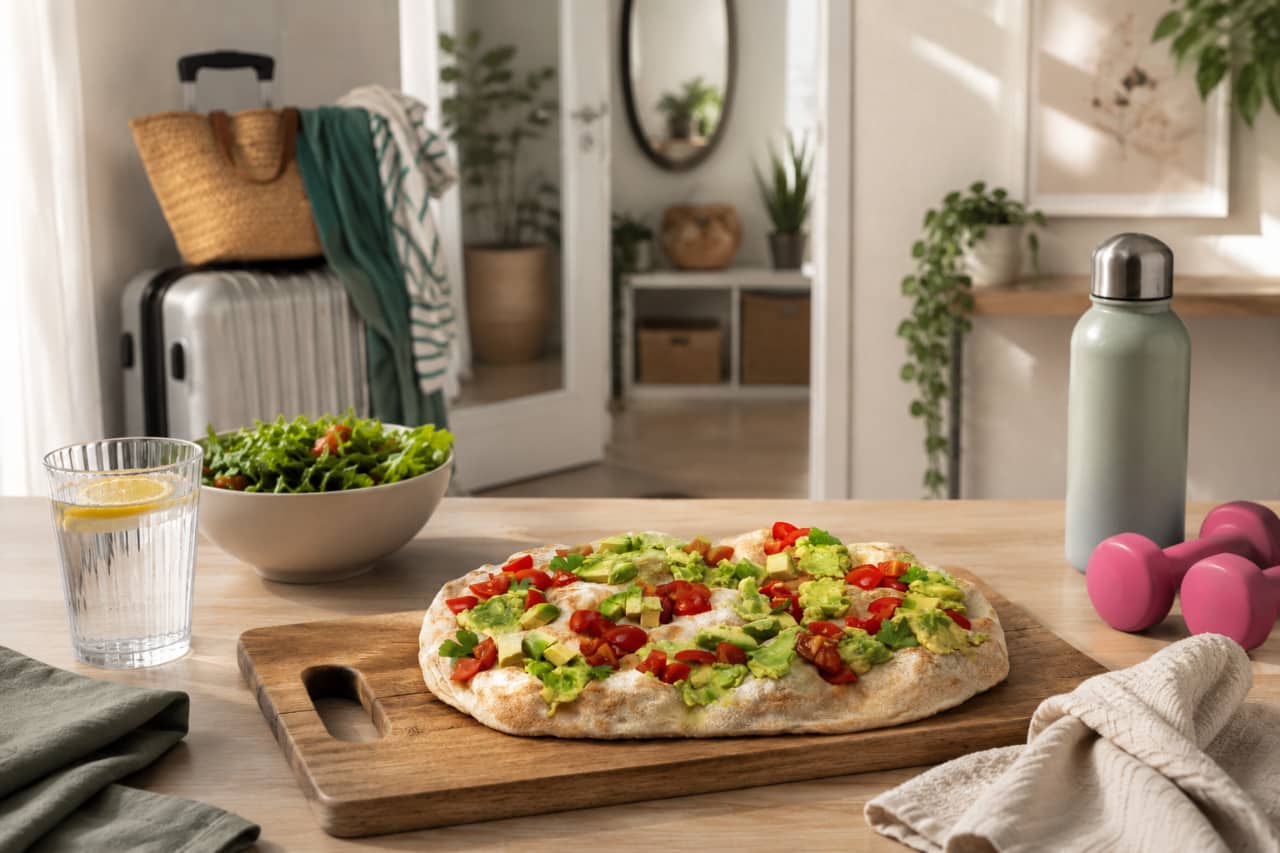
This is probably the most natural pairing: zucchini, eggplants, peppers, but also raw or seasonal vegetables. It lends itself to endless combinations, all focused on lightness and freshness. - Pinsa with legume or vegetable hummus
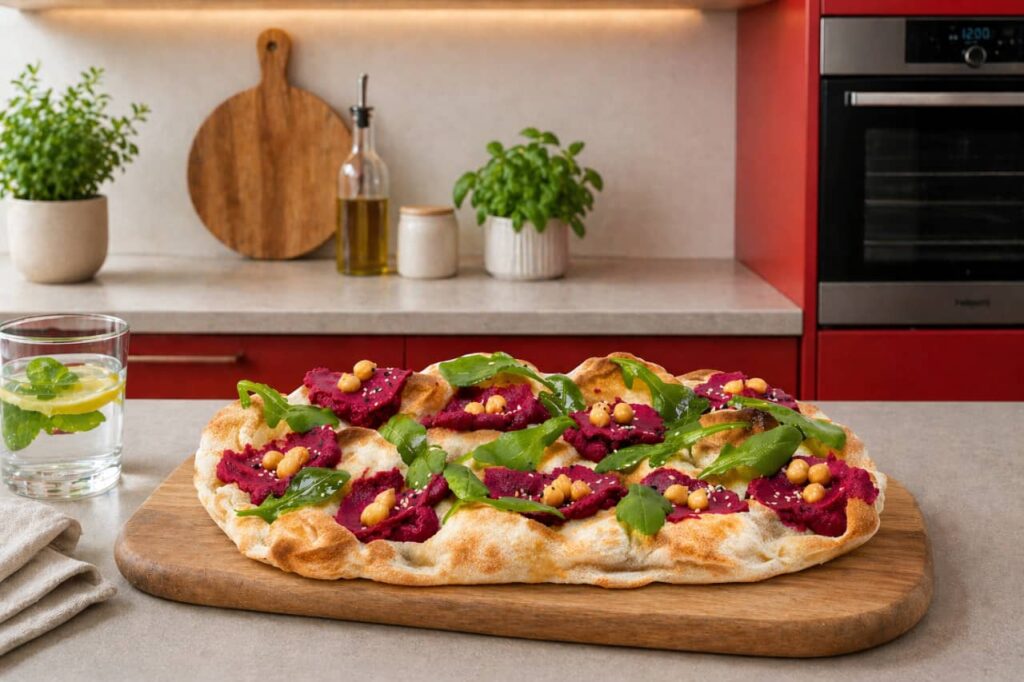
A creamy and balanced alternative: hummus made from legumes (such as chickpeas or lentils) or vegetable-based variations like beetroot provide plant protein and fiber. It pairs well with fresh ingredients. - Pinsa with tuna
Perfect for a quick but balanced meal: tuna provides protein and combines easily with vegetables and lighter ingredients. - Pinsa with bresaola
One of the favorite choices among athletes: rich in protein, flavorful and low in fat. Ideal if you are looking for a light but satisfying meal. - Margherita Pinsa
The most classic version, which can still be balanced when prepared with quality ingredients and without excesses.
The point is simple: Pinsa can be as light as the ingredients you choose to pair with it. And it is precisely this flexibility that makes it suitable for mindful eating, even as part of a balanced diet.