When you think of a mid-morning snack, you probably picture the classic break at your desk: it is 11 a.m., you stop what you are doing and look for something to eat before getting back to work.
Not every morning, however, is spent in front of a computer. You might be working from home, studying in the library, travelling, enjoying a few days of vacation or simply having a free morning with no plans. The result is the same: at some point, that little pang of hunger starts the countdown to lunch.
The immediate solution is to ignore it and resist. Or you can open the pantry and eat the first thing you find, with the risk of overdoing it without even noticing. A mid-morning snack should instead be a small, pleasant break, suited to what you are doing and, above all, to how much time is left before lunch.
Are you really hungry or do you just need a break?
When you start thinking about food at 11 a.m., try to understand why. You may be hungry because you had breakfast very early or skipped it, but you may simply be tired, bored or need to step away from what you are doing for a few minutes. It is not a test: asking yourself this question simply helps you choose a snack that suits the moment.
If lunch is only one or two hours away, you do not need to eat until you are full, which is why both what you choose and the quantity matter. Eating directly from a packet of biscuits or putting much more than you need in front of you makes it easier to lose track of how much you are eating; preparing a portion, on the other hand, gives the break clearer boundaries.
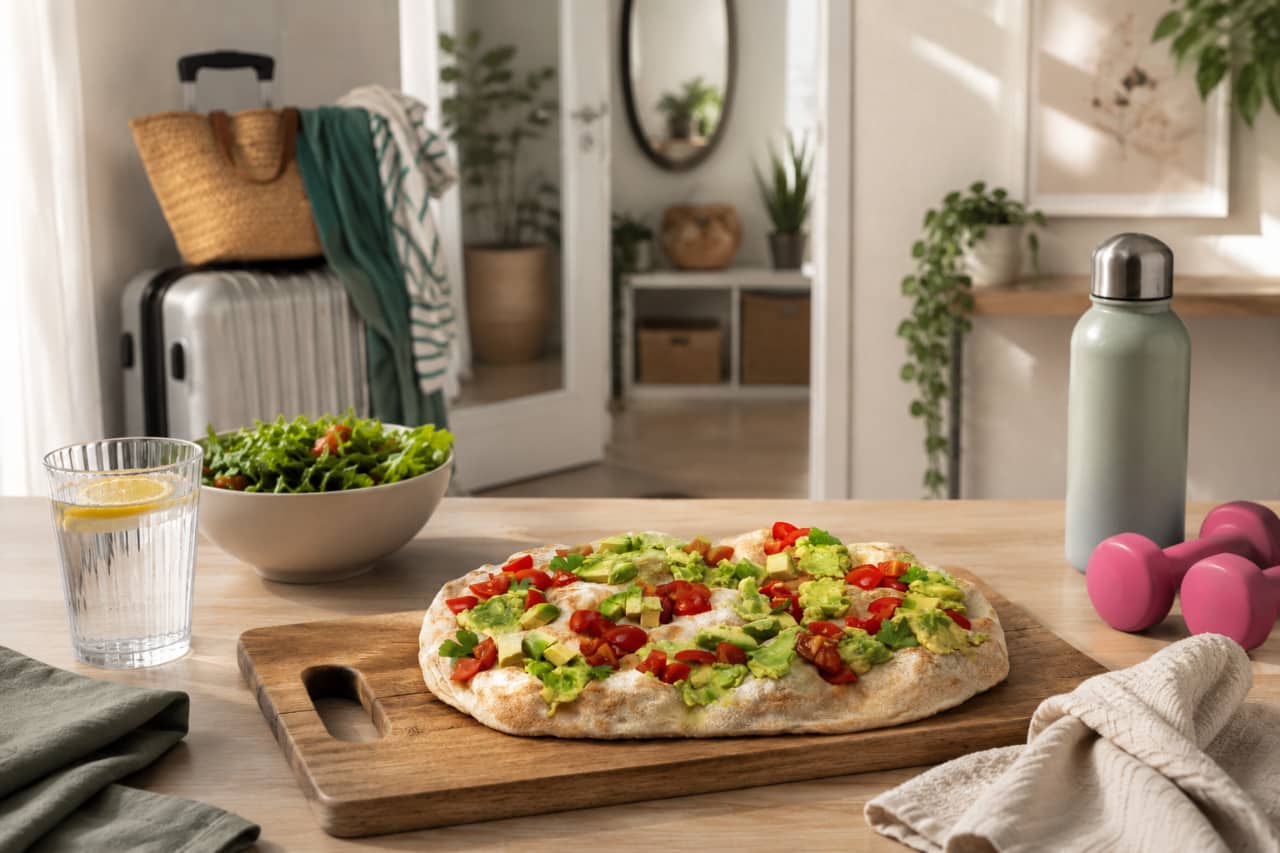
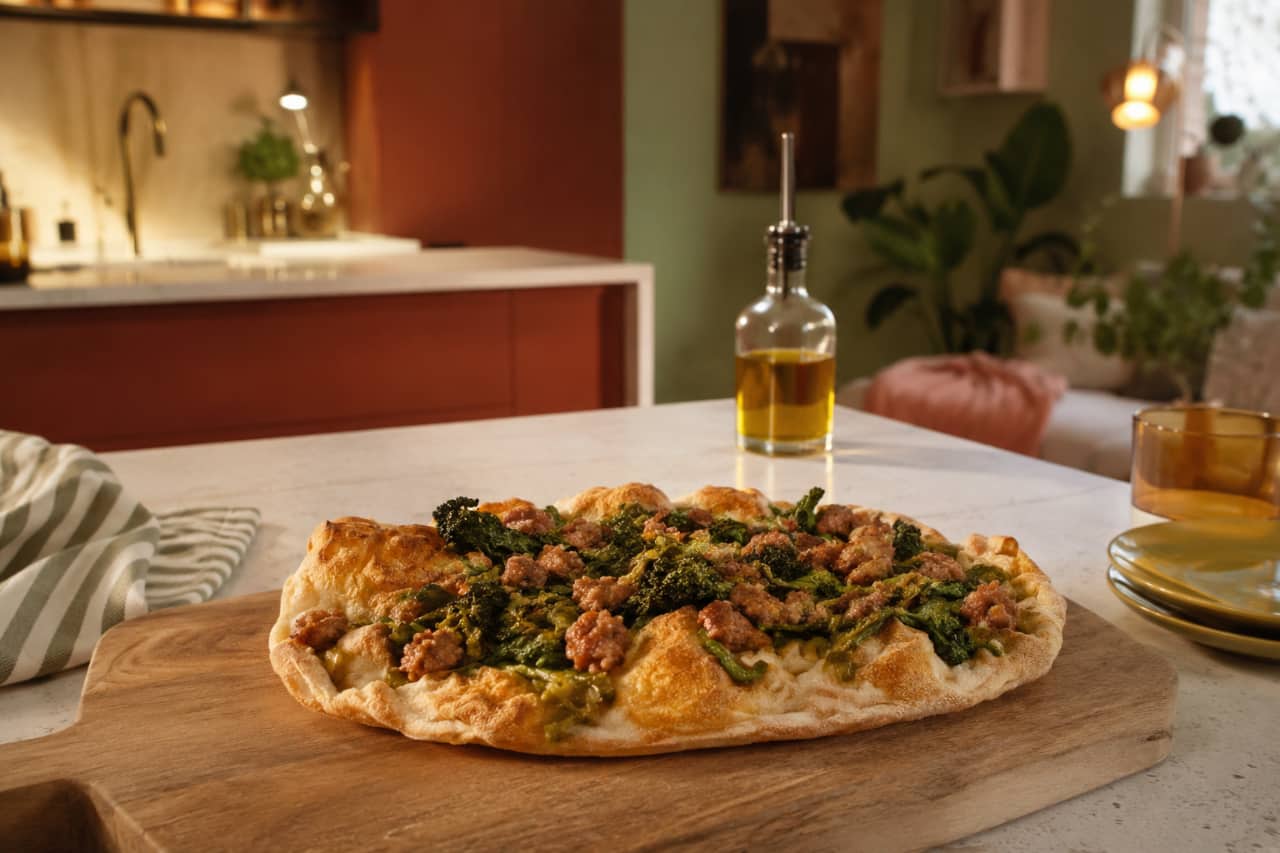
If you choose Pinsa Di Marco for your breaks, you do not need a whole base and this is not the time to load it with everything you can find in the fridge. You can choose a snack-sized format, cut it into small portions and keep them specifically for your break, preferably topped with something light.
The context will do the rest. Let us look at the two most common situations.
If you are at home, plan ahead
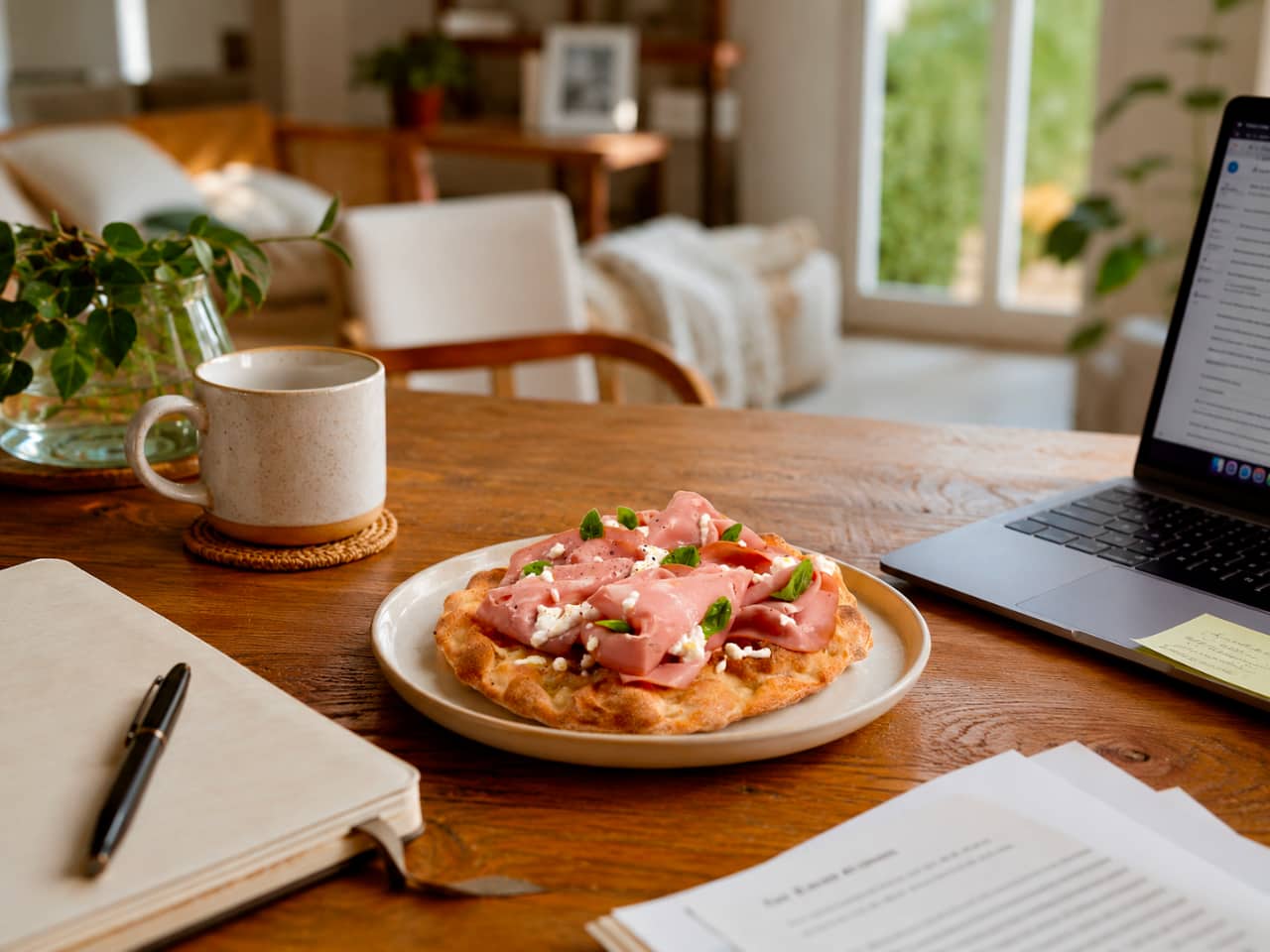
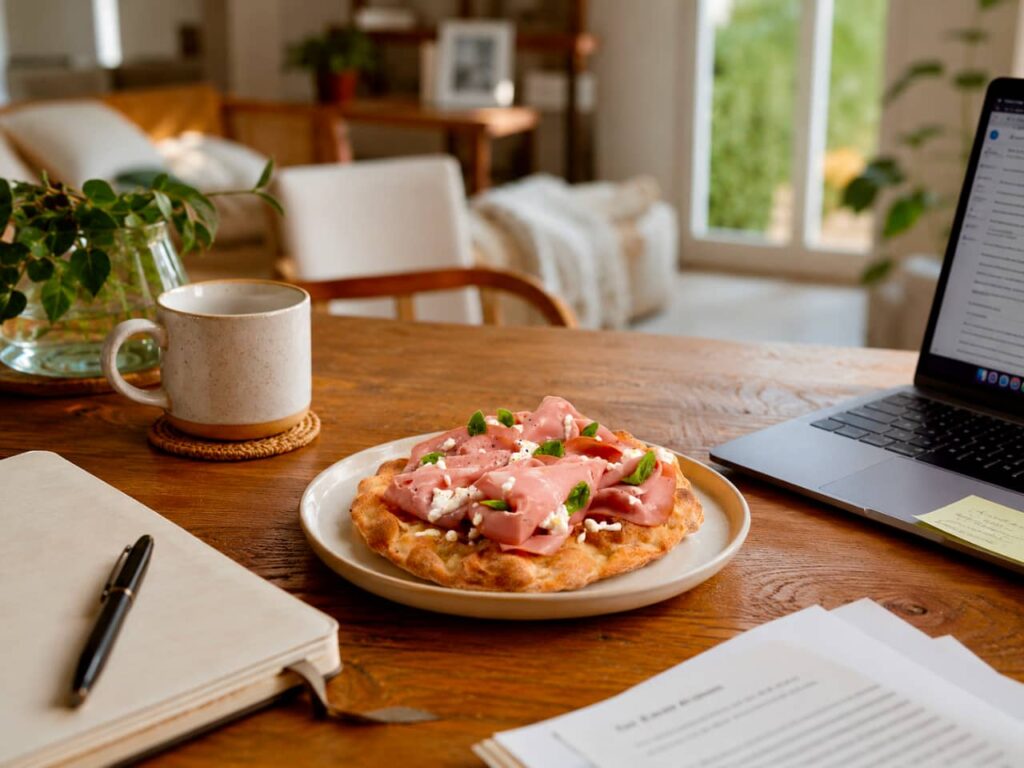
If you spend the morning at home, you have one advantage: the fridge and oven are within easy reach, but at eleven you still do not want to — or cannot — start cooking. Your snack should be something you can grab, heat briefly and eat in a few minutes, not something you start preparing only once hunger has already arrived.
The solution is to plan ahead. If you prepare a Pinsa for dinner, for example, you can set aside a few small pieces for the following morning. Do it straight away, before bringing it to the table, and you can apply the same idea when you prepare Pinsa over the weekend, dividing it into portions suitable for breaks over the following days.
Bear in mind that what works at dinner does not always work equally well at eleven in the morning. For the portion you want to save, it is better to keep things light and simple, using moist ingredients sparingly, as over time they could make the base less pleasant. Once it has cooled, store it in the fridge in a closed container rather than leaving it on the kitchen counter until someone gets hungry.
When it is time for your break, you can briefly reheat the slice to restore some fragrance and crispness to the base, without turning the process into a second cooking.
Finally, take advantage of being at home to really switch off. Step away from the computer for a few minutes, put only the portion you have decided to eat on your plate and leave the rest in the fridge. Lunch is close: the aim is not to eliminate every trace of hunger, but to give yourself a pleasant break. That is all.
If you are at work or school, focus on practicality
In this case, you cannot simply open the fridge when hunger strikes. You need to think about it in advance, without making life complicated: the ideal snack should fit easily into your bag, keep well, make no mess and be easy to eat even when you have little time and no cutlery available. It is the famous Italian schiscetta, born in Milan and now known throughout Italy.
The first thing to do is decide in advance how much to take with you. Cut the Pinsa at home and place only the portion intended for your break in the container. Taking extra just in case makes it very easy to turn a snack into an early lunch, especially if you eat while working, studying or talking to someone. A smaller format, such as Snack Di Marco, can help you start with a size that is already better suited to the occasion and divide it further if necessary.
Your choice of topping should also suit the context. In the office, classroom or library, ingredients work best when they stay in place, do not release liquid and do not have aromas that take over the room. It is not just a matter of good manners: a dry, compact Pinsa is easier to carry, does not require cutlery and reduces the risk of ending up with stains on the container, your bag or your desk.
If you have access to a fridge, use it. If there is an oven or another suitable way to reheat it, use that too. Otherwise, an insulated bag can be a useful option.
Finally, here too, remember to take a few minutes away from the screen whenever you can. Practicality does not mean eating over your keyboard: a short break, with a pre-set portion, allows you to enjoy your snack and then get back to what you were doing. Without reaching lunchtime feeling as though you have already eaten it.
Mistakes to avoid with your mid-morning snack
Even a short break can become less useful if you organise it badly. Here are the most common mistakes to avoid when choosing Pinsa for your snack.
Waiting until you are hungry to think about it
If you start preparing everything at eleven, you risk wasting time or grabbing the first thing available. Leaving a portion ready in the fridge makes the choice much quicker.
Taking more than you need
A full container encourages you to keep eating, especially if you eat while working or studying. Decide on the portion at home and take only that amount with you.
Underestimating storage
Leftover Pinsa should not sit for hours on the kitchen counter or inside a bag. Keep it in the fridge and, when you are away from home, consider using an insulated bag.
Choosing an unsuitable topping
An ingredient that is very liquid, difficult to bite into or has a particularly strong aroma may work well at home but become inconvenient in the office, classroom or while travelling. Before preparing your snack, think about where and how you will eat it.
Ultimately, you do not need to invent a new recipe every time. You simply need to change the way you organise your Pinsa: prepare it in advance, divide it into the right amount and adapt it to your morning. Whether you are at home, in the office, at university or travelling, you will have something tasty ready when hunger strikes, without ruining your lunch.