If you’re thinking about a tasty and easy Pinsa, peppers are a great place to start. They bring color, aroma, and a natural sweetness that pairs well with both cheeses and more savory ingredients like cured meats, anchovies, or olives.
In this article, we’ll explore why they work so well on Pinsa and how to prepare them properly, before moving on to a few simple and delicious variations.
Why peppers are a great topping for Pinsa
There are several reasons why peppers are such a smart choice when you want a flavorful Pinsa without overcomplicating things. They’re easy to handle, pair well with many ingredients, and allow you to create balanced toppings even with just a few components.
Here’s why they work so well:
They add flavor without being heavy
Peppers have a natural sweetness that enhances flavor without making the topping too rich. This makes them ideal for highlighting the Pinsa base without overpowering it.
They adapt to the texture of Pinsa
If used raw and thinly sliced, they stay crunchy and create a pleasant contrast with the softer part of the Pinsa Di Marco. If cooked in the oven or sautéed, they become softer and blend perfectly with the crispy surface.
They pair easily with many ingredients
Peppers go well with dairy products like mozzarella, scamorza, or stracciatella, as their sweetness balances the creaminess of the cheese. At the same time, they match well with stronger, saltier ingredients like sausage, anchovies, tuna, or cured meats.
They make Pinsa more appealing
Red, yellow, or green: the color of peppers makes Pinsa more vibrant and appetizing. Even with just a few ingredients, the final result looks rich and well put together.
How to prepare peppers for a perfect Pinsa
One of the advantages of peppers is that you can prepare them in different ways, even very quickly. By changing the preparation method, you change the final result: crunchier, softer, more intense, or creamier. Let’s look at four options.
Raw peppers, thinly sliced (2–3 minutes)
This is the fastest option. If the peppers are fresh, you can use them raw: wash them well and slice them very thin, almost julienne. This way they stay crunchy and add freshness to the Pinsa, creating a nice contrast with the soft base.
Sautéed peppers (5–7 minutes)
Cut the peppers into strips and sauté them quickly in a pan with a drizzle of oil and a pinch of salt. In just a few minutes, they become soft and flavorful without losing all their texture. It’s one of the most practical solutions for a quick and tasty topping.
Pepper cream (10–15 minutes)
If you want to create a different base, you can make a cream. Cook the peppers in a pan or in the oven until soft, then blend them with a drizzle of oil and a pinch of salt. You’ll get a smooth, fragrant, and colorful cream to spread on the Pinsa before adding other ingredients.
Roasted peppers (20–25 minutes)
If you have more time, roast the peppers in the oven until the skin starts to darken. Once cooked, peel them and slice them. The flavor becomes sweeter and more intense, and the texture very soft. They’re perfect when you want to give your Pinsa a full, slightly smoky taste.
Pinsa with peppers: 4 simple and tasty variations
When building a Pinsa with peppers, the key is balance. On one side, you have the sweet and aromatic flavor of the peppers; on the other, you need something to balance it: a creamy cheese, a savory ingredient, or a stronger note to complete the topping.
Starting from this idea, here are some simple and successful variations you can easily prepare at home.
Pinsa with peppers and mozzarella
This is probably the most natural combination. The sweetness of the peppers pairs perfectly with the creaminess of mozzarella, creating a balanced and pleasant topping. The flavors are not aggressive, and the result remains simple and enjoyable.
It’s also one of the easiest versions to prepare.
For best results, quickly sauté the peppers in a pan with a drizzle of oil and a pinch of salt.
Then top the Pinsa before baking with well-drained mozzarella, evenly distributed. The peppers can be added during baking or after, if you want to keep them slightly firmer.
Once baked, finish with a drizzle of extra virgin olive oil and, if you like, a few fresh basil leaves.
The result is a simple, fragrant, and well-balanced Pinsa—perfect when you want something tasty without overcomplicating the process.
Pinsa with peppers and sausage
This is a more intense, rustic variation, very popular because it combines the sweetness of peppers with the bold flavor of meat.
Despite its rich taste, the preparation is quite simple.
Sauté the peppers in strips with a bit of oil and salt until soft and flavorful.
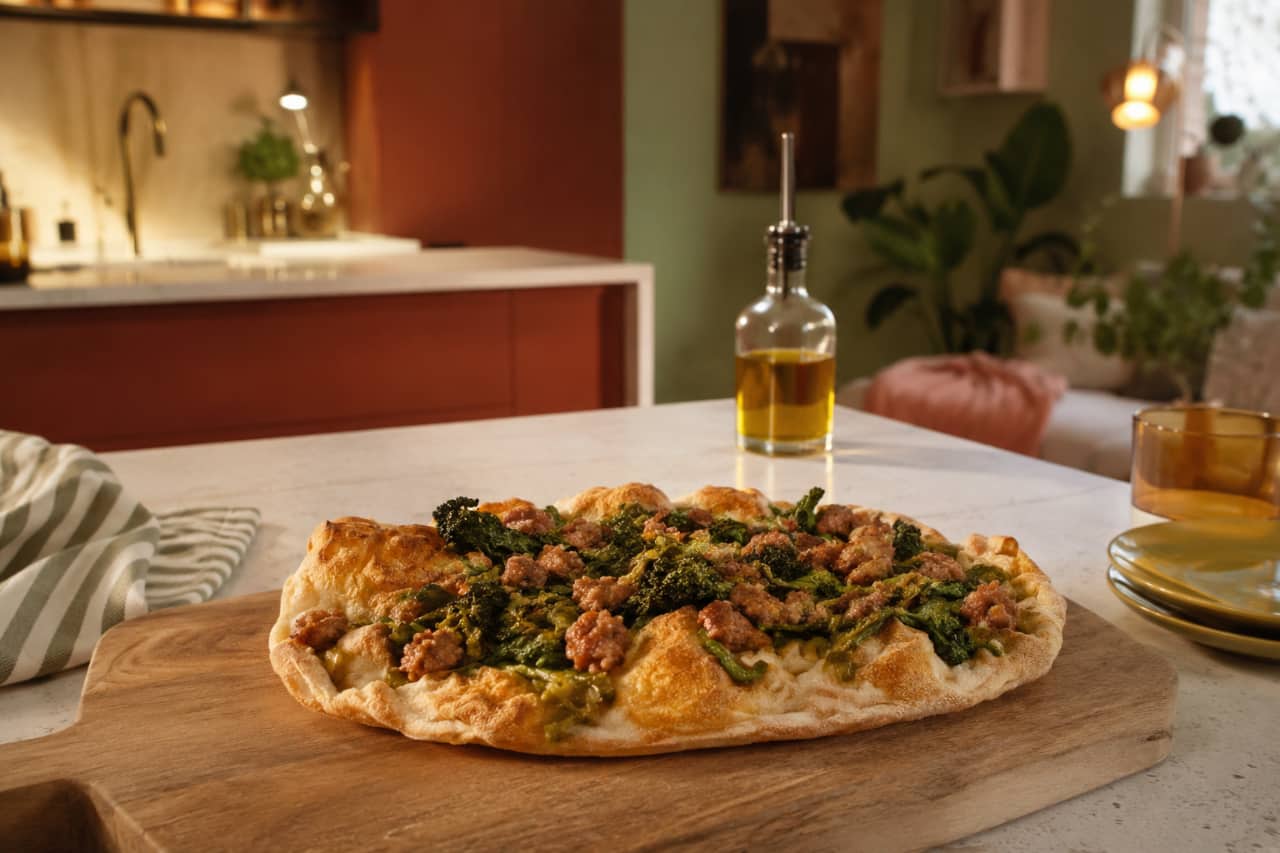
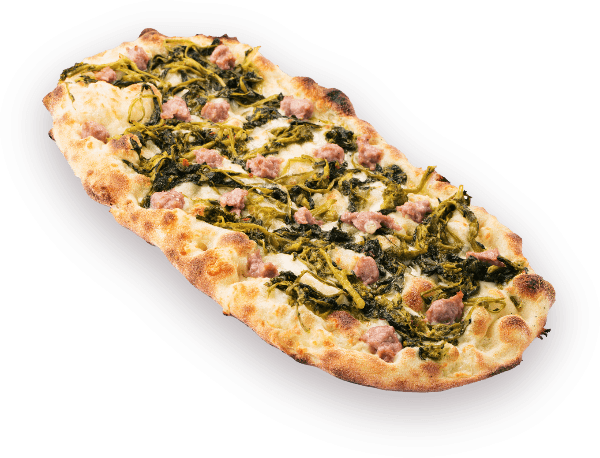
Top the Pinsa with mozzarella before baking, then add small pieces of raw sausage along with part of the peppers.
During baking, the sausage will cook and brown together with the base. After baking, you can add a few more strips of pepper to balance temperature and texture.
You’ll get a rich and satisfying Pinsa, perfect when you want a fuller yet balanced topping.
Pinsa with peppers, anchovies, and capers
This combination is all about balance between sweet and savory. Peppers bring softness and sweetness, while anchovies and capers add intensity and character.
Preparation is still simple, though it takes a bit more time due to roasting.
Start by preparing the peppers: roast them whole or in pieces until soft and slightly charred. Once ready, peel them and cut into strips.
Top the Pinsa before baking with a light layer of well-drained mozzarella. Add the peppers and a few anchovy fillets. Anchovies can be added during baking or after, depending on how strong you want the flavor.
Once out of the oven, finish with rinsed capers, a drizzle of extra virgin olive oil, and, if you like, a few oregano leaves.
The result is a bold yet perfectly balanced Pinsa made with just a few ingredients.
Pinsa with pepper cream, stracciatella, and pistachios
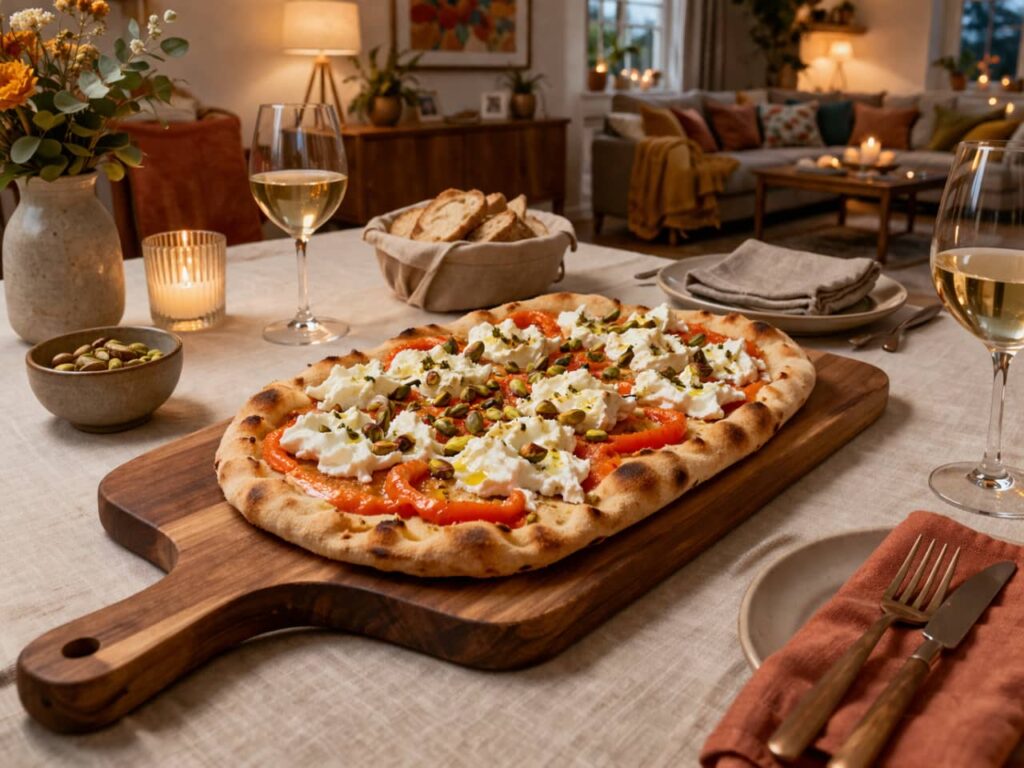
This variation focuses on contrast between creaminess and crunch. The pepper cream creates a soft base, stracciatella adds freshness, and chopped pistachios bring the necessary crunch.
It’s a simple recipe with a very refined result.
Prepare the pepper cream by blending cooked peppers (pan-fried or roasted) with a drizzle of extra virgin olive oil and a pinch of salt until smooth.
Spread the cream on the Pinsa before baking, using it instead of tomato sauce. Bake until the base becomes crispy.
After baking, add the stracciatella with a spoon. Finish with chopped pistachios, a drizzle of olive oil, and a few fresh basil leaves.
You’ll get a fragrant Pinsa where the sweetness of peppers, the creaminess of the cheese, and the crunch of pistachios create a balanced and original topping.