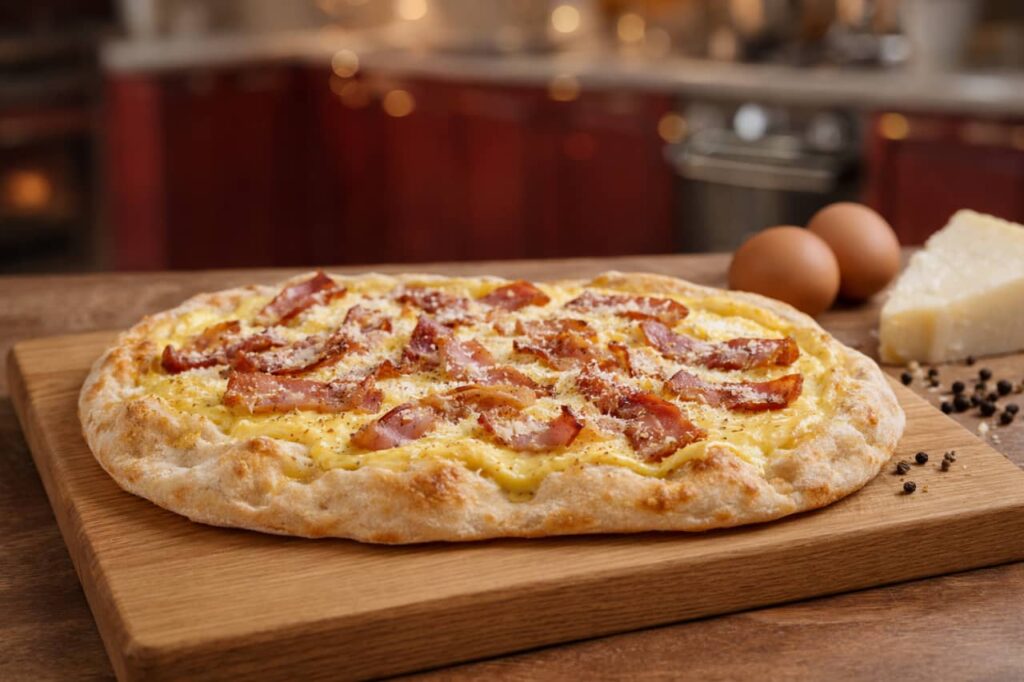
You don’t joke about carbonara, and as Romans we know it well. That’s exactly why the idea of serving it on Pinsa might seem bold. Yet it works — and it works very well.
Pinsa Carbonara takes an icon of Roman cuisine and places it on a different base, with very few adaptations compared to the original recipe. Once the initial surprise fades, even purists tend to appreciate it.
Here we explain how to prepare it at home. It’s not a five-minute recipe, but the result is worth the wait. Trust us.
The ingredients: few, but carefully chosen
Pinsa Carbonara doesn’t require many ingredients. In fact, the fewer there are, the more important they become.
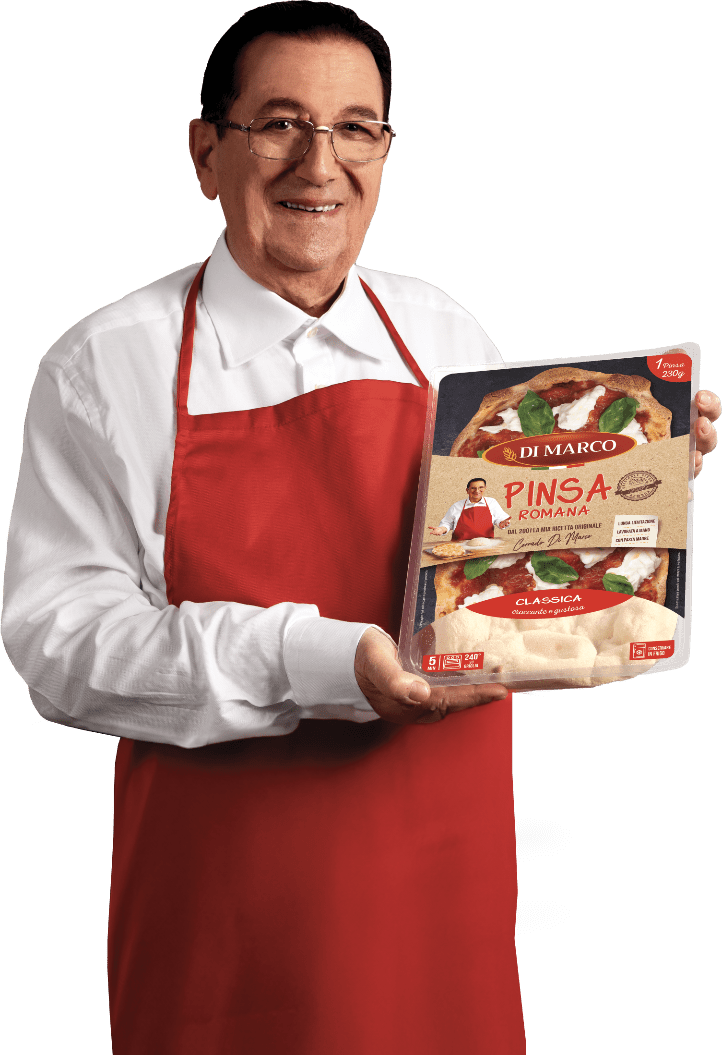
Start with a Pinsa Romana Di Marco, the ideal base for a rich topping like carbonara, because it supports the ingredients without weighing down the bite, leaving room for flavor.
Two egg yolks. They are the heart of the cream: they must be fresh and handled carefully, because the final creaminess depends on them — the kind that coats the Pinsa without becoming sticky.
Sliced guanciale. Always look for a good balance between lean and fat. The fat provides softness, while the lean part keeps the bite cleaner and intensifies the flavor.
Pecorino Romano and black pepper. The pecorino should be flavorful but not overpowering: it must add character, not dominate everything else, so pay attention to quantities.
The egg cream: the step that makes the difference
In Pinsa Carbonara, the egg cream must be handled with care because it needs to remain soft, velvety, and stable, never turning into scrambled eggs.
To prepare it, place the egg yolks in a bowl over a bain-marie, with the water at around 90 °C. Stir continuously: the yolks will begin to bind and turn into a thick, smooth cream. The goal is to heat them just enough to make them creamy, without letting the temperature rise too high, otherwise the yolks will coagulate and the texture will be ruined.
Once ready, set the cream aside. You will use it after baking the Pinsa, when the residual heat will be enough to enhance it without curdling it.
Managing moisture during baking
Before proceeding, think about how to manage the moisture of the base: you must avoid drying it out too much in the oven while also respecting the character of an iconic recipe like carbonara.
The simplest options are two.
The first is to prepare a light pecorino cream, which helps maintain the right level of moisture during baking. Start by placing water and a little cornstarch in a saucepan, bringing it to a gentle simmer and stirring until it begins to thicken. Then let it rest for about 30 minutes, add pecorino, and blend until smooth. If necessary, add a little more water to adjust the consistency: it should be soft and easy to spread, but not liquid.
The second option, though further from the original recipe, is to use a very thin layer of mozzarella. Just a little — enough to retain moisture and support a generous guanciale topping.
Preparation, step by step
Now everything is ready: the egg cream, the Pinsa Romana Di Marco, and the measured ingredients. At this point, it’s all about assembling everything in the right way. Follow these steps and you won’t go wrong.
A thin layer of pecorino cream (or mozzarella) on the base
Spread a light layer: as mentioned, its main purpose is to protect the Pinsa during baking and maintain the right moisture level. Don’t overdo it.
Distribute the guanciale
Arrange it generously, without overlapping too much. In the oven it will release its fat, flavoring the base and giving character to the entire Pinsa.
Pepper: before or after?
A light sprinkle before baking is recommended: heat releases the aromas of pepper and intensifies its flavor. If you like, you can add a little more at the end.
Five minutes in the oven
Bake at 250 °C for about 5 minutes. The base should become crispy and the guanciale nicely browned, without burning.
Add the egg cream
As soon as the Pinsa comes out of the oven, spread the cream over the surface. Do it gently and without excess: it should coat, not cover.
Finish with more pecorino
If you used pecorino cream during baking, you can add a little more. Otherwise, a fresh grating of pecorino completes the dish perfectly and stays true to the recipe.
Now the Pinsa Carbonara is ready to be served. If everything has been done correctly, the first bite reveals the crunch of the base, followed by the velvety egg cream that envelops everything. Then come guanciale and pecorino, savory and fragrant, and the pepper tying all the flavors together. At that point, a second bite is inevitable.
It’s a different carbonara, of course. But surprisingly faithful in spirit.