Cacio e pepe is one of the great symbols of Roman cuisine: a dish built on just a few ingredients, essential in form yet incredibly intense in flavor. It’s made with Pecorino Romano, black pepper, and pasta—nothing more—and it’s precisely this apparent simplicity that makes it so iconic. Don’t be fooled, though: achieving an outstanding result requires technique.
Traditionally, cacio e pepe is prepared with tonnarelli, a type of spaghetti typical of the Lazio region, but it’s also widely made with classic spaghetti or rigatoni. Long pasta holds the sauce, while the final mixing process creates the creamy texture that has made the dish famous worldwide.
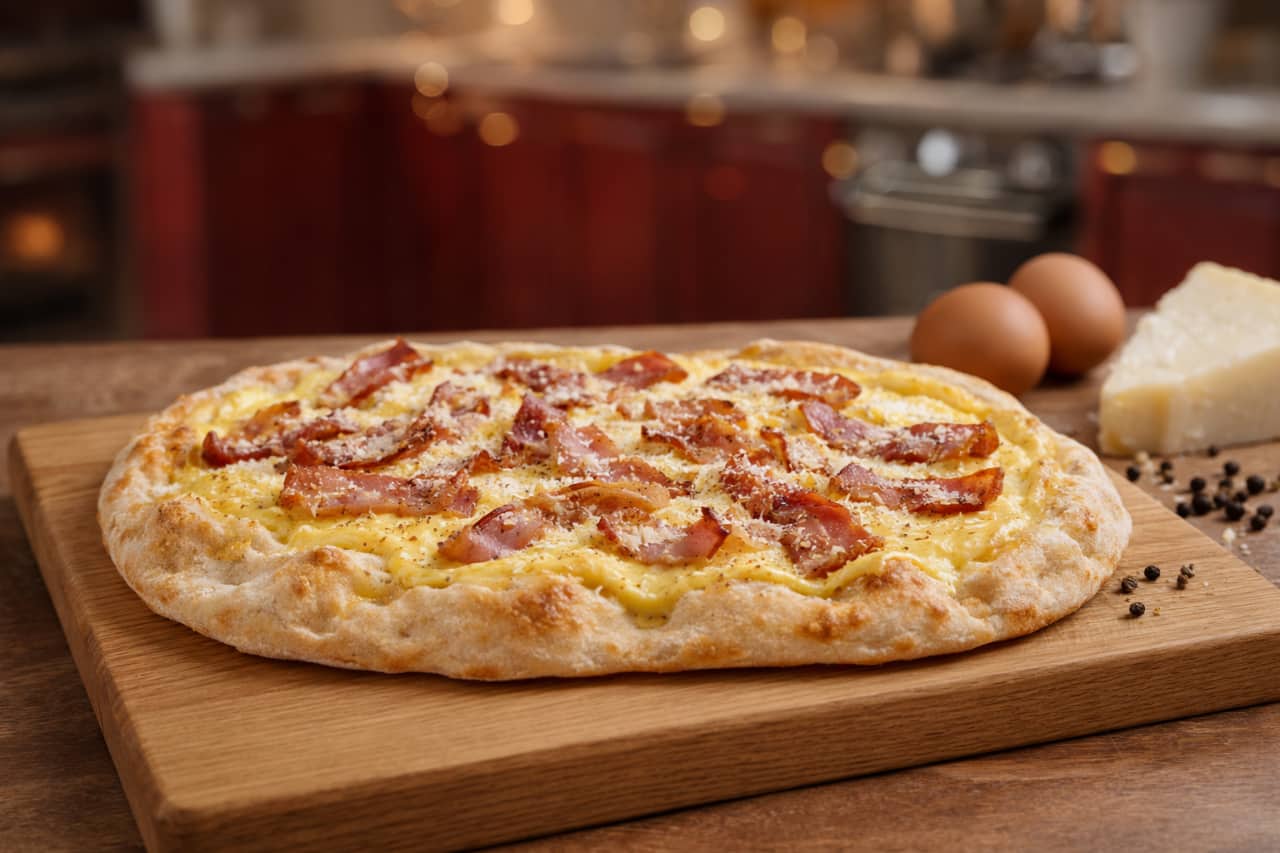
So the question is: can cacio e pepe work on Pinsa? The answer is yes—provided a few small adjustments are made without altering its identity.
Let’s find out how.
How authentic cacio e pepe is made
To understand how to adapt the recipe to Pinsa, we need to clarify one key point: the cacio e pepe cream is not a sauce prepared in advance—it forms during the cooking of the pasta. This is the technical heart of the dish.
- You start by cooking the pasta in lightly salted water, since Pecorino Romano is already quite salty. Meanwhile, freshly ground black pepper is toasted in a pan: heat enhances its aroma and builds the flavor base.
- When the pasta is almost ready, it’s transferred to the pan with the pepper along with some of its starchy cooking water. Cooking is completed in 2–3 minutes.
- At the same time, a ladle of cooking water is poured into a bowl with the grated pecorino and mixed vigorously until it becomes creamy. This is where the magic happens: the starch released by the pasta allows the cheese to melt gradually, creating a smooth, glossy, and enveloping emulsion.
- The cheese must never be added over direct heat. The heat is turned off, the pecorino cream is incorporated gradually, and everything is mixed, adjusting the consistency with more cooking water if needed. The final cream should be fluid, shiny, and free of lumps.
One thing must be clear: there is no cream in cacio e pepe. In recent years, many versions have introduced cream or other shortcuts to simplify the process, but these deviate from the original recipe. Authentic creaminess comes only from the interaction between pecorino, pepper, and pasta water.
And this is exactly where the challenge begins: since on Pinsa we don’t have pasta water, what can we do?
Three ways to prepare Pinsa cacio e pepe
When bringing cacio e pepe onto Pinsa, there’s no single correct approach. It all depends on how faithful you want to stay to tradition and what kind of result you’re aiming for: stricter or more creative.
Here are three interpretations to try: simple, flavorful, and ready in under 10 minutes.
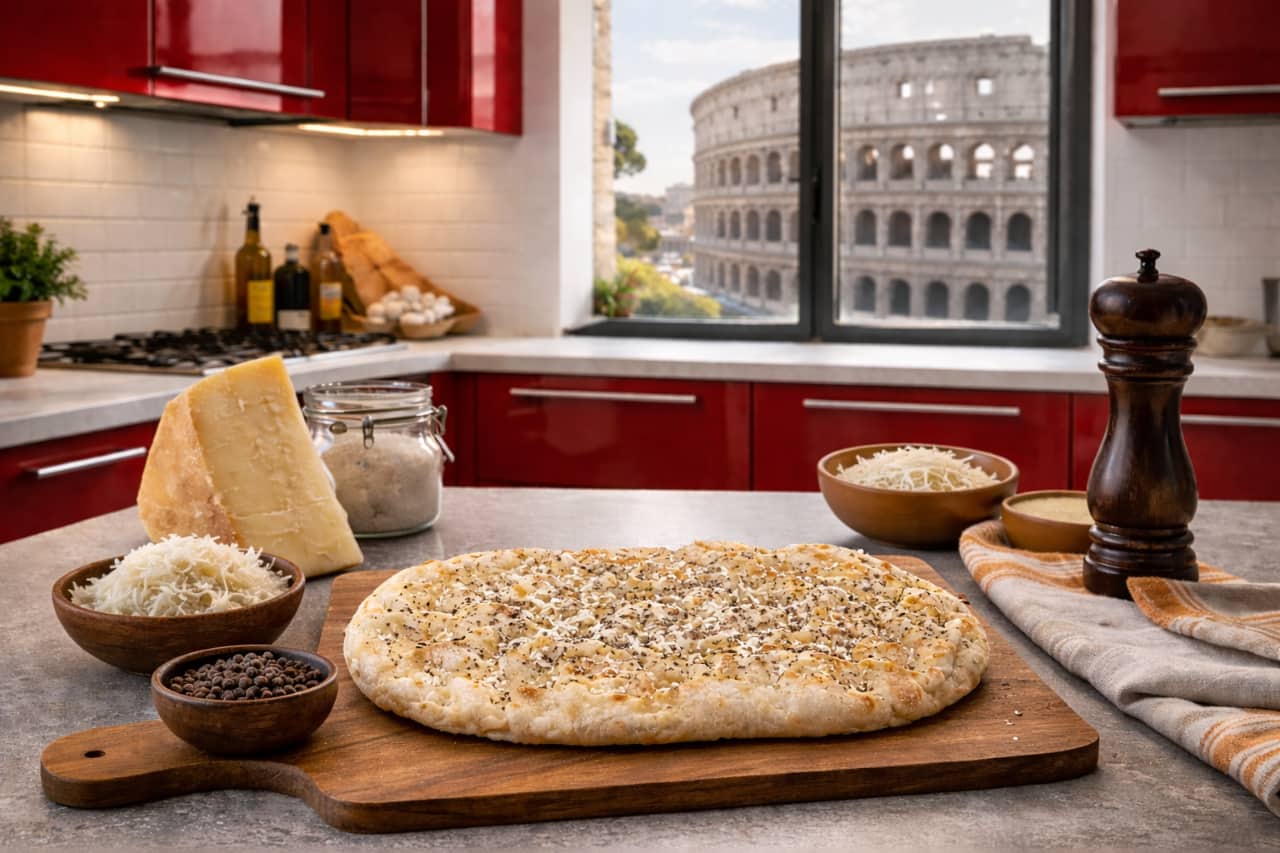
The essential version: closest to the Roman spirit
This is the most direct, almost minimalist approach. It starts from the idea that cacio e pepe is built on two key ingredients and doesn’t need anything else.
In a bowl, combine:
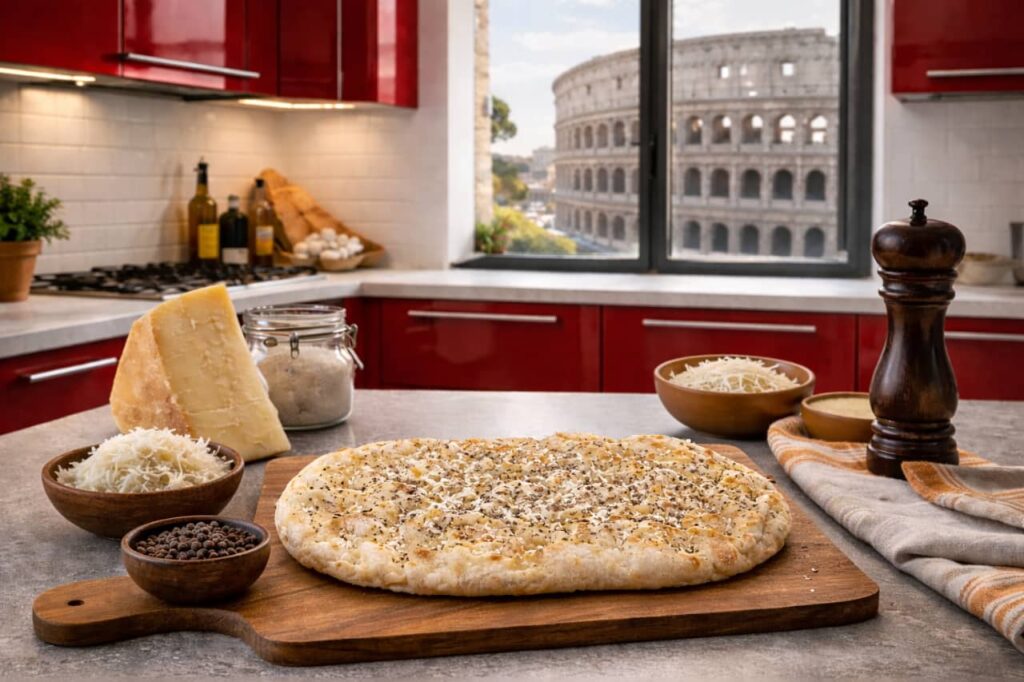
- finely grated Pecorino Romano;
- freshly ground black pepper.
Mix and distribute the blend over the Pinsa. There are only a few key details to keep in mind:
- avoid adding salt (the pecorino is already very salty);
- drizzle a little extra virgin olive oil before baking the Pinsa Di Marco. The oil is essential: it helps the cheese melt slightly and prevents the surface from becoming too dry.
This version is bold, dry, and very characterful. The risk is that it may feel slightly dry, but if well balanced, it retains a strong traditional identity.
The more technical version: with emulsified pecorino cream
Here we take a more technical approach. The goal is to replicate the mechanism of traditional cacio e pepe, where creaminess comes from the emulsion between pecorino and starchy water.
Since we don’t have pasta water, we prepare a cream separately using:
- grated Pecorino Romano;
- black pepper;
- a small amount of hot water (added gradually).
Mix until you obtain a smooth, compact, and homogeneous cream.
Spread a thin layer before baking, then add more cream after cooking. As always, be mindful of salt.
This version is probably the most balanced: it stays true to the philosophy of the original recipe while adapting to the structure of Pinsa, ensuring greater creaminess.
The creative version: softer and less faithful to tradition
Here you consciously move away from tradition. The goal is no longer to replicate pasta cacio e pepe, but to reinterpret its flavors in a way that suits Pinsa.
Before baking, add to the base:
- mozzarella;
- finely grated Pecorino Romano;
- lightly toasted black pepper.
The mozzarella makes the result more balanced and creamy, helping prevent dryness. The flavor becomes softer and more harmonious.
This version is often finished after baking with ingredients that don’t belong to traditional cacio e pepe but add freshness and contrast without overpowering its character. You can try fresh arugula, light vegetables, or delicate aromatic notes such as lemon zest, fresh thyme, or marjoram.
It’s no longer a strict cacio e pepe, but a contemporary reinterpretation. If you embrace this shift, it can become one of the most delicious Pinsa variations.
Enjoy your meal.